

If you own a Samsung or LG refrigerator, washer, or dishwasher and it just stopped working the way it should, you have probably already noticed something frustrating. These are not simple machines anymore. They are packed with digital control boards, inverter compressors, and sensors that talk to each other, and that complexity is exactly why Samsung vs LG appliance repair looks so different from fixing an older, mechanical appliance.
Homeowners in Abilene often call us after a first attempt at repair went sideways, either because a generic part didn’t match the appliance’s electronics, or because a handyman without brand specific training misdiagnosed the real issue. This guide breaks down what actually separates these two brands from a repair standpoint, why using the correct specialized parts matters more than most people realize, and how to avoid paying twice for the same fix.
Why Samsung and LG Appliances Are Harder to Repair Than Older Models
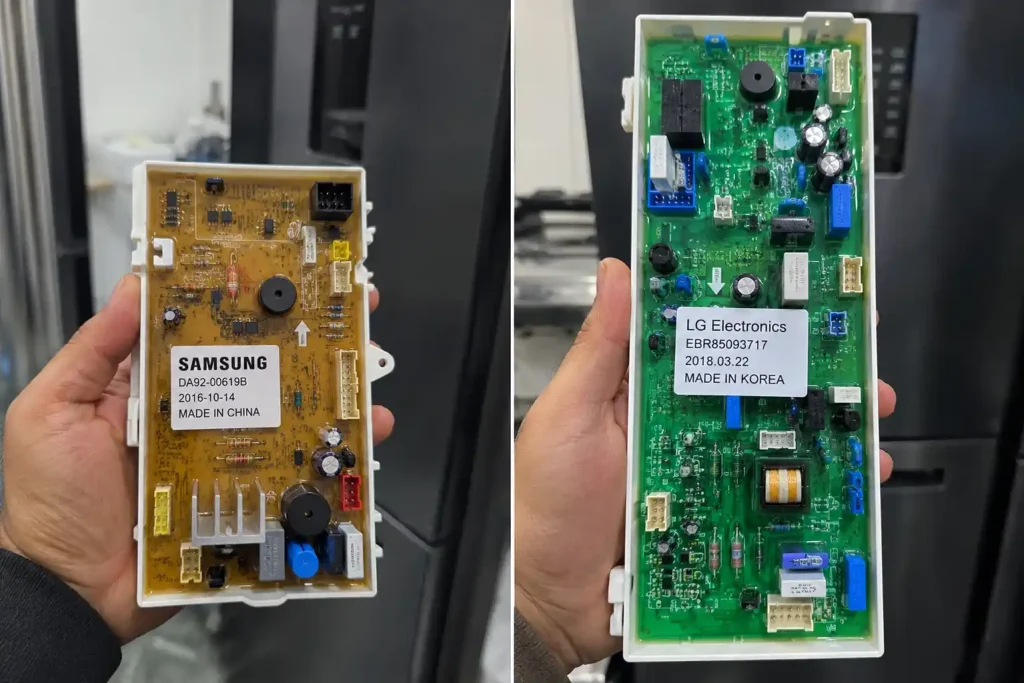
Older refrigerators, washers, and ovens ran on relays, timers, and mechanical switches. A technician with a multimeter and some experience could trace most faults in under an hour. Samsung and LG changed that equation. Both brands built their appliance lineups around digital inverter technology, touchscreen interfaces, and proprietary circuit boards that communicate directly with the compressor, motor, or heating element.
That shift brought real benefits. Inverter compressors run quieter, use less electricity, and adjust their speed based on demand instead of cycling on and off. But it also means a failure rarely has one obvious cause. A refrigerator that stops cooling could be a failed compressor, a bad inverter board, a communication error between boards, or a sensor sending incorrect readings, and each of those requires a different specialized part and a different diagnostic approach.
This is the core reason generic, universal replacement parts often fail to solve the problem, or only mask it temporarily.
Digital Control Boards Are Brand Specific
Samsung’s main control boards are programmed with firmware unique to that model line, and LG does the same with its own smart diagnosis system. A board pulled from a similar looking appliance, or a cheap aftermarket clone, frequently will not communicate correctly with the compressor or sensors, even if it physically fits into the housing. This is one of the most common reasons a homeowner replaces a part themselves and the appliance still misbehaves.
Inverter Compressors Need Matched Components
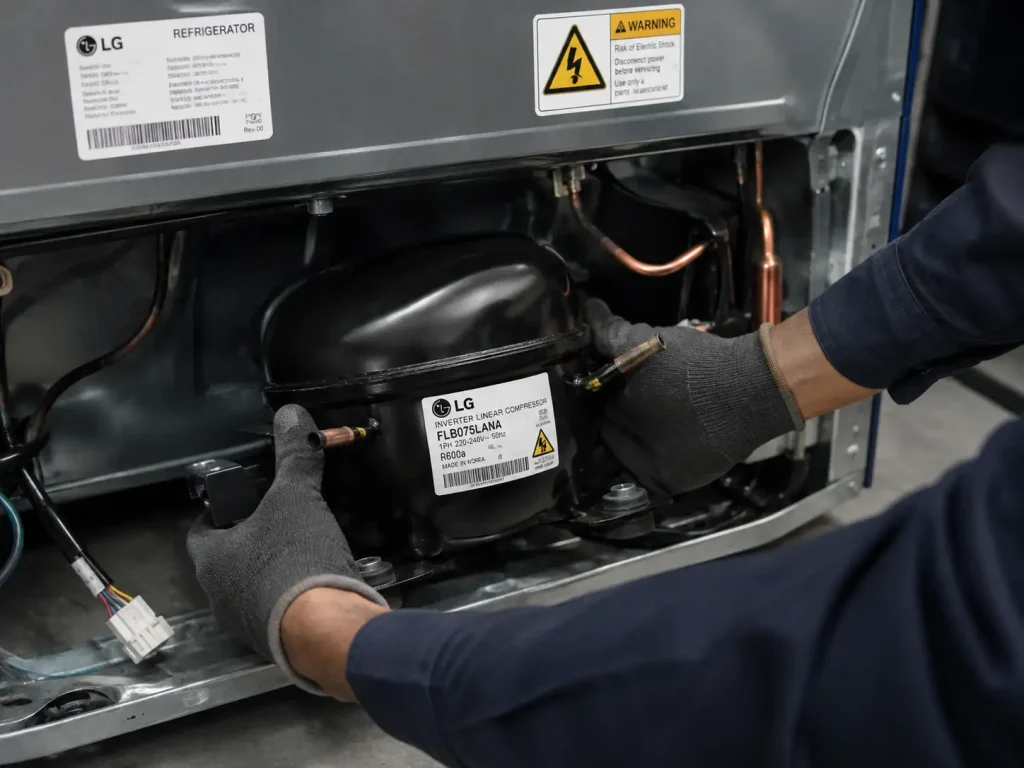
Both Samsung and LG use linear or rotary inverter compressors in most of their refrigerators. These compressors are paired with a specific inverter board that regulates voltage and frequency. Installing a compressor without the matching board, or using a board rated for a different compressor size, can burn out the new part within weeks. This is a costly mistake we see fairly often when a well meaning homeowner or unlicensed repair person tries to save money on parts.
Samsung vs LG Appliance Repair: Key Differences by Appliance Type
Not every appliance category behaves the same way when it comes to parts and diagnostics. Here is how the two brands typically compare across the appliances we service most often for Abilene homeowners.
| Appliance | Samsung Common Issue | LG Common Issue | Parts Complexity |
| Refrigerator | Ice maker freezing over, compressor and control board failures | Linear compressor failure on units 6 to 8 years old | High, both require proprietary boards |
| Washing Machine | Digital inverter motor faults, control board errors | Direct Drive motor sensor issues | Moderate to high |
| Dryer | Sensor and moisture detection faults | Heating element and control board faults | Moderate |
| Dishwasher | Control panel and water inlet valve issues | Motor and drain pump faults | Moderate |
| Microwave | Magnetron and control board failures | Door switch and control board failures | Moderate |
As several independent repair networks have noted, LG appliances tend to generate more frequent but lower cost repairs, while Samsung failures happen less often but can involve pricier components like compressors and main boards.
The Real Cost of Using the Wrong Parts
This is the part most homeowners do not think about until it has already cost them money. When a repair is done with a generic or mismatched part, three things tend to happen.
- The appliance appears fixed for a short period, then the same symptom returns within weeks
- A second, unrelated component fails because it was never designed to work with the substitute part
- The manufacturer warranty is voided because a non OEM part was installed, leaving the homeowner fully responsible for any future related failure
We have walked into more than a few Abilene kitchens where a refrigerator had already gone through one failed DIY repair attempt using a part that looked correct but was never rated for that specific compressor. The second repair almost always costs more than if the correct part had been used the first time.
What OEM Parts Actually Protect
Original equipment manufacturer, or OEM, parts are built and tested by Samsung or LG specifically for that model line. Using them protects three things at once: the appliance’s remaining warranty coverage, the accuracy of the appliance’s internal diagnostics, and the lifespan of the surrounding components that depend on correct voltage, timing, or firmware communication. Using factory correct refrigerator parts during a repair is one of the biggest factors in how long the fix actually lasts, especially for cooling system failures. Related post: Why Is My Refrigerator Not Cooling? (Complete Guide to Every Cause, Fix, and Prevention Strategy)
Samsung Appliance Repair: What Makes It Unique
Samsung built its reputation on smart features, from Family Hub refrigerators with built in touchscreens to washers that sync with a mobile app. That same technology creates specific repair challenges.
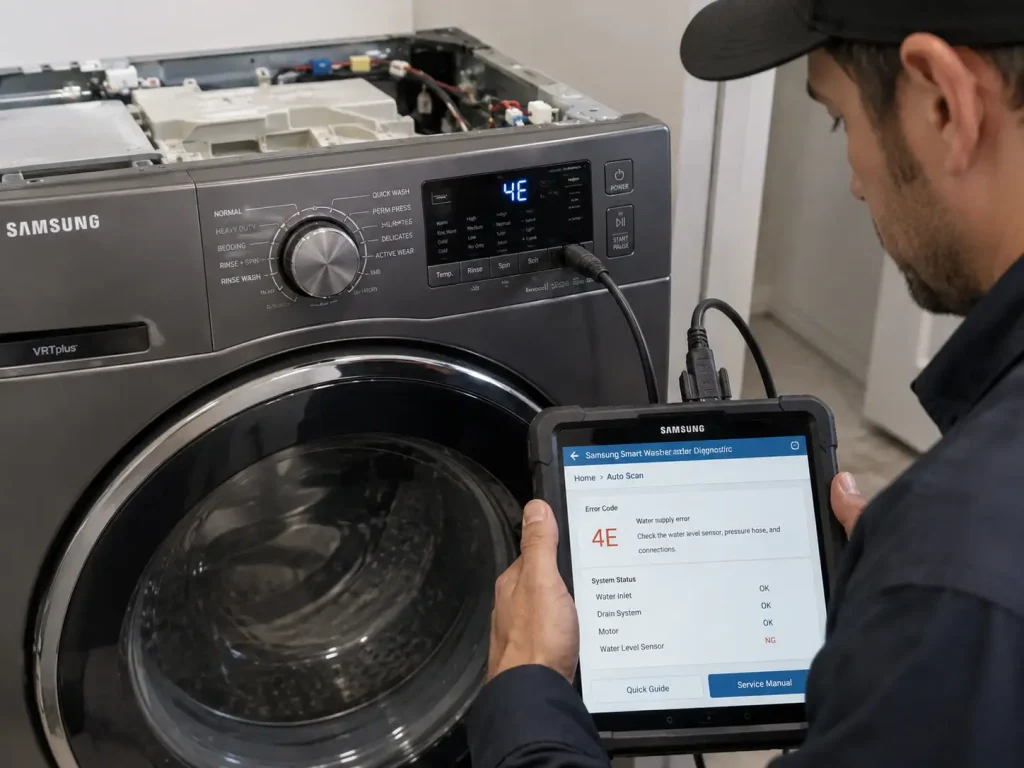
- Samsung’s proprietary diagnostic system often requires brand specific software to read fault codes accurately, adding labor time compared to older appliances
- Ice maker assemblies on French door models are a frequent failure point, and the replacement assembly must match the exact model’s defrost and insulation design
- Digital inverter compressors are efficient but expensive to replace, and pairing a mismatched inverter board is one of the fastest ways to damage a brand new compressor
Samsung publishes model specific service documentation for its appliances, which is one resource independent technicians reference when confirming a part number before ordering. You can review general troubleshooting information directly through Samsung’s official support site.
LG Appliance Repair: What Makes It Unique
LG takes a slightly different engineering approach, particularly with its Direct Drive motor technology in washers and its linear compressors in refrigerators.
- LG’s Direct Drive washer motors connect straight to the drum without a belt, which reduces certain failure points but makes motor sensor replacement more specialized
- Linear compressor failures tend to show up later in an appliance’s life, typically between years six and eight, and often come with a longer labor bill even when the compressor itself is still under an extended parts warranty
- LG’s smart diagnosis feature can transmit error data through the appliance’s control panel, which helps a technician confirm the fault before ordering a specialized part instead of guessing
For homeowners who want to understand LG’s own guidance on appliance care and warranty terms, LG’s official support and warranty resource is a useful reference point.
Repair or Replace: A Practical Framework
Once a Samsung or LG appliance needs a major component like a compressor, main board, or motor, the repair versus replace decision becomes real. A simple rule many technicians use is the 50 percent guideline: if the repair cost, including labor and parts, is less than half the cost of a comparable new appliance, and the unit is under roughly eight years old, repairing is usually the smarter financial move.
| Scenario | Estimated Repair Cost | Recommendation |
| Refrigerator, ice maker or inlet valve issue, under 8 years old | $150 to $350 | Repair |
| Refrigerator, compressor or main board failure, under 6 years old | $400 to $700 | Repair |
| Refrigerator, compressor failure, over 9 years old | $500 plus | Evaluate replacement |
| Washer, motor sensor or control board fault | $200 to $450 | Repair |
| Dryer, heating element or control board fault | $150 to $350 | Repair |
Costs vary based on the exact model and the part’s availability, and getting an accurate number always starts with a proper diagnosis rather than a guess. If your refrigerator has stopped cooling properly and you are trying to decide whether it is worth fixing, our technicians can walk through the diagnosis with you before any part is ordered.
How to Prepare Before Calling a Technician
A little preparation on your end can shorten the diagnostic time and help your technician arrive with the right parts on the first visit.
- Write down the exact model and serial number, usually found on a sticker inside the door or drawer
- Note any error codes displayed on the digital panel, along with when they appear
- Describe the timeline of the problem, whether it started suddenly or gradually got worse
- Avoid running additional diagnostic cycles or resets repeatedly, since this can sometimes clear codes a technician needs to see
- If the appliance is still under manufacturer warranty, hold onto the purchase receipt before scheduling independent repair
If your washing machine has stopped spinning or draining properly, our troubleshooting guide walks through the most common causes before you schedule a visit. Related post: Washing Machine Won’t Spin? Here Are the Most Likely Causes
Why Choosing a Technician With Brand Specific Training Matters
Not every appliance repair company stocks parts for both Samsung and LG, and not every technician has been trained on their specific diagnostic systems. Some smaller shops avoid these brands altogether because of the added complexity, which can leave homeowners with fewer options when something breaks.
Working with a licensed and insured local appliance repair team means your technician arrives already familiar with both brands’ digital diagnostic tools, has access to verified OEM part suppliers, and can explain the actual root cause instead of replacing parts by trial and error.
We also recommend keeping up with basic seasonal appliance care between repairs, since simple maintenance steps often prevent smart appliances from throwing avoidable error codes in the first place. Our home appliance maintenance checklist covers the small habits that extend the life of Samsung, LG, and other major brand appliances.
Frequently Asked Questions
Is Samsung or LG more expensive to repair?
It depends on the failure. LG appliances tend to have more frequent, lower cost repairs like ice maker sensors or water valves, typically in the $80 to $180 range. Samsung tends to fail less often but with pricier components like compressors or main control boards, which can run $400 to $800.
Can a universal or generic part be used instead of an OEM part?
Generally, no. Samsung and LG control boards, compressors, and sensors are programmed or calibrated for specific model lines. A generic part may physically fit but fail to communicate correctly with the appliance’s system, leading to repeat failures or damage to other components.
Does using a non OEM part void my warranty?
In most cases, yes. If your appliance is still under manufacturer warranty, using a non factory part for repair can void that coverage, leaving you responsible for any future related repair costs.
How long do Samsung and LG appliances typically last?
With proper maintenance and timely repairs, most refrigerators, washers, and dryers from either brand last 10 to 15 years. Compressor and motor failures become more common after year 8.
Do you carry specialized parts for both Samsung and LG appliances?
Yes. Our technicians work with verified parts suppliers for both brands and confirm the correct part number against your appliance’s model and serial number before any repair begins, so you are not paying for a fix that will not last.
If your Samsung or LG appliance is showing an error code, not cooling, or making unusual noises, getting the right diagnosis before the wrong part gets ordered saves both time and money. Our team services both brands with correctly matched, manufacturer verified parts, and we walk you through the actual repair cost before any work begins. Reach out to our team to schedule a diagnostic visit for your Samsung or LG appliance.