

If your washing machine won’t spin in Abilene TX, you are dealing with one of a handful of specific problems that local technicians see every single week. The good news is that most of these causes are diagnosable without tearing the machine apart, and many are fixable without spending a fortune.
This guide walks you through every major cause, from the quick checks you can do yourself in five minutes to the mechanical failures that need a professional’s hands.
Why Spin Problems Hit Abilene Homes Harder
Before getting into the causes, here is something most people don’t know.
Abilene’s water is notoriously hard. It carries high levels of calcium and magnesium that slowly coat the inside of your washing machine, clogging pumps, stiffening hoses, grinding down bearings, and forcing motors to work harder than they should.
A machine that might last 14 years in a soft water city can show serious wear in 8 to 10 years here. Local technicians regularly open up Abilene washers and find mineral buildup that makes an 8-year-old machine look twice its age on the inside.
That context matters because several of the causes below happen faster and more frequently in West Texas than anywhere else. Keep that in mind as you read through them.
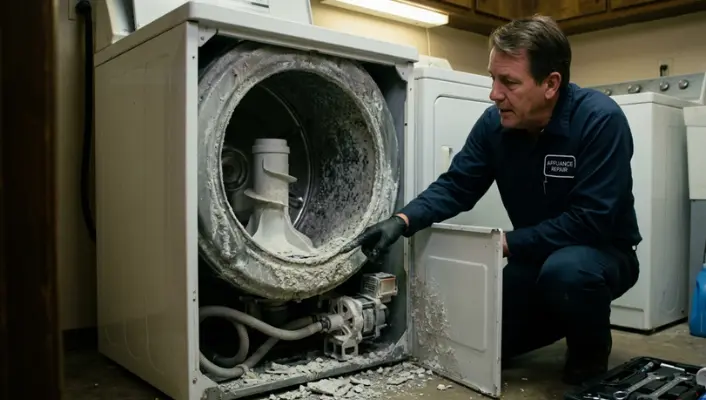
How the Spin Cycle Actually Works
Understanding the process helps you understand why it fails.
When your washer shifts into the spin phase, the drum rotates at anywhere from 800 to 1,400 RPM. That speed creates centrifugal force that pushes water out of your clothes and through the drum’s perforations. The water then travels through a drain pump and exits through the drain hose.
For this to work, several things must happen together:
The lid or door must be confirmed closed. The control board must send the right signal. The motor must run. The drive system must transfer that power to the drum. And the drain pump must successfully remove water, because most washers are programmed to refuse spinning if water is still sitting in the drum.
When any one of those steps breaks down, your clothes come out soaking wet.
Cause 1: Faulty Lid Switch or Door Latch
This is one of the most common causes, and it is also the one people miss most often.
What it does: The lid switch tells the machine the lid is safely closed before allowing the spin cycle to start. It is a safety feature.
What goes wrong: After years of daily use, the plastic housing cracks, the internal contacts wear out, or the small tab that activates the switch breaks off. When that happens, the machine thinks the lid is always open, even when it is shut tight.
What you notice: The machine washes and drains just fine. But when it is time to spin, nothing happens at all.
On front-loaders, the same job is done by the door latch assembly. If that latch does not fully engage, the control board refuses to spin as a precaution.
A technician can test this part in minutes with a basic multimeter. Replacement is usually one of the more affordable repairs on this list.
Cause 2: Broken or Worn Drive Belt
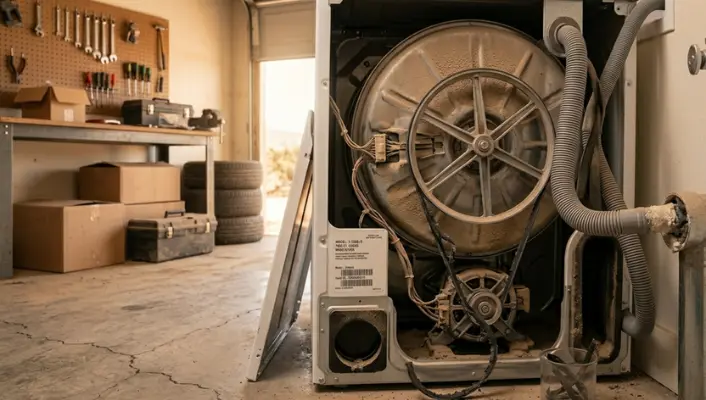
Many washing machines use a rubber belt to connect the motor to the drum. Think of it like a fan belt in a car. When it snaps or wears out, the motor runs but the drum goes nowhere.
Signs to watch for:
- You hear the motor humming during the spin phase but the drum does not move
- Clothes come out wetter than usual even after a full cycle
- A faint burning rubber smell during the spin phase
In Abilene, summer heat in garages and utility rooms accelerates rubber deterioration. A belt that might last ten years in a climate-controlled space can become brittle and crack much sooner here.
Replacing a belt means accessing the rear or bottom panel of the machine. It is doable for someone handy, but easy to misroute if you are not familiar with your specific model.
Cause 3: Clogged or Failed Drain Pump
Here is something that surprises most homeowners: your washer will refuse to spin if it cannot drain properly first.
The machine is programmed this way on purpose. Spinning a drum full of water would strain the motor and potentially cause serious damage.
How the pump fails in Abilene: Mineral scale from hard water gradually coats the inside of the pump housing, slows the impeller, restricts water flow, and eventually causes the pump to fail completely. It is one of the most common repair calls in the area.
Signs of a drain pump problem:
- Water sitting in the drum after the cycle ends
- A loud humming noise during the drain phase with no water movement
- An error code on the display related to drainage
Front-load washers have a drain filter near the bottom front of the machine that catches lint, coins, and debris. If you have never cleaned it, that is the first place to check. It is a five-minute job and sometimes the entire fix.
Cause 4: Motor Coupling Failure
If you own a Whirlpool or Maytag direct drive machine, this one is especially relevant.
These machines skip the belt entirely. Instead, a small flexible component called the motor coupling connects the motor directly to the transmission. It is intentionally designed to break under overload, sacrificing itself to protect the more expensive motor.
What causes it: Consistently overloading the machine. Large families with heavy loads of work clothes, sports gear, or thick towels are the most common victims.
What you notice: The motor runs, you can hear it, but the drum does not move. You may also find small plastic fragments inside the bottom of the cabinet, which is a telling sign the coupling has already broken.
The part itself is inexpensive. Getting to it requires more disassembly than most people want to tackle on their own.
Cause 5: Failing Motor
The motor is what makes the drum spin. When it starts to fail, the whole process falls apart.
How motors fail in Abilene: Hard water mineral deposits that infiltrate motor bearings create friction and heat over time. The motor works harder, runs hotter, and eventually burns out or seizes. This tends to happen sooner in Abilene machines than national averages would suggest.
Warning signs before complete failure:
- Inconsistent spinning, fast one load and slow the next
- Unusual grinding or struggling sounds during the spin cycle
- The machine starts fine but slows down mid-spin
Motor replacement is one of the more expensive repairs on this list. If your machine is older and the motor has gone out, a technician should give you an honest assessment of whether the repair makes financial sense before you commit.
Cause 6: Control Board or Electronic Module Problem
Modern washers are computer-controlled. The main control board manages every phase of every cycle. When it starts to fail, the results are often inconsistent and confusing.
What it looks like: The machine washes and drains normally, but the spin simply never starts. Or it cuts out randomly partway through. Or it displays an error code that seems unrelated to spinning but is actually a communication failure between the board and a motor or sensor.
What causes board failures: Power surges, high humidity, age-related deterioration of capacitors, and the kind of electrical fluctuations that come with West Texas thunderstorms.
This repair requires careful diagnosis. A good technician will rule out every mechanical cause before recommending a board replacement, because boards are expensive and misdiagnosis here costs real money.
Cause 7: Unbalanced Load or User Error
Not every spin failure means something is broken. Sometimes the machine is doing exactly what it was designed to do.
Unbalanced load: When heavy items like comforters, towels, or work jeans shift to one side during washing, the drum becomes lopsided. The machine detects the imbalance through internal sensors and shuts down the spin to prevent vibration damage.
Fix: Open the machine, redistribute the items evenly, and restart the spin cycle. That is often all it takes.
Wrong cycle selected: Delicate and hand-wash cycles are designed to spin at very low speed or skip the high speed spin entirely. If someone changed the cycle setting without realizing it, clothes will come out wet through no fault of the machine.
Too much detergent: Excess suds can confuse the water level sensor, causing the machine to add extra rinse cycles or delay spinning. This is especially common in high efficiency machines that require HE-specific detergent.
Cause 8: Worn Drum Bearings
The drum rotates on a set of bearings that handle significant mechanical stress, especially during high-speed spins. Over time, those bearings wear down.
How it progresses:
First you notice noise. A healthy washer is relatively quiet during the spin. A washer with failing bearings produces a grinding, rumbling, or roaring sound that gets louder as spin speed increases.
Then vibration increases. The machine may start shaking enough to walk across the floor.
Eventually the bearings degrade to the point where the drum cannot spin freely enough to complete the cycle.
Bearing replacement is labor-intensive because accessing them requires nearly complete disassembly of the machine. On an older unit, the labor cost makes this a repair that deserves careful cost-versus-replacement consideration.
Cause 9: Blocked or Kinked Drain Hose
This one is easy to overlook because the drain hose has no moving parts. But it can be the entire reason your machine refuses to spin.
Common problems with the drain hose:
- A kink from the machine being pushed too close to the wall
- The hose inserted too far into the standpipe, creating a siphoning effect
- Mineral scale and lint accumulation inside the hose over years of use
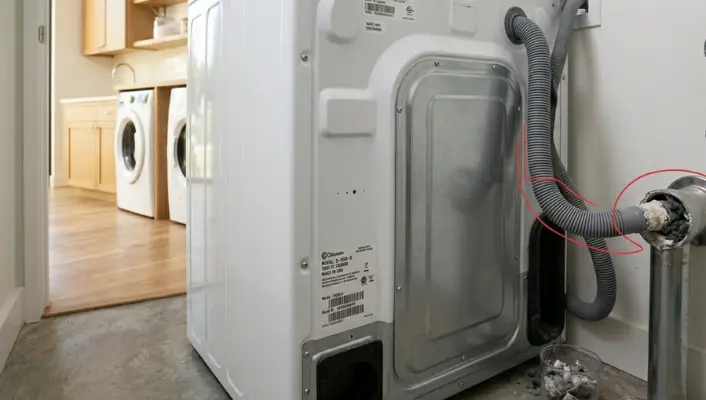
The fix: Pull the machine out from the wall and trace the hose from the back of the washer to where it connects to the standpipe. Look for kinks, sharp bends, or areas where the hose is pinched. The end of the hose should go no more than 6 to 8 inches into the standpipe.
This is a check anyone can do without tools and takes under ten minutes.
Quick Diagnostic Checklist: Start Here Before Calling Anyone
Work through these in order before picking up the phone:
Step 1: Redistribute the load evenly and restart the spin cycle.
Step 2: Confirm you are on a cycle that includes high speed spin, not delicate or hand wash.
Step 3: Check behind the machine for any kinks or pinches in the drain hose.
Step 4: If your machine has a bottom front access panel, check and clean the drain pump filter.
Step 5: Listen during the spin phase. Motor humming but drum not moving points to a mechanical drive issue. Complete silence points to an electrical issue like the lid switch or control board. Humming with water still in the drum points to the drain pump.
Those five steps cover the most common causes and take less than 15 minutes total.
Should You Repair or Replace?
Once you know what is wrong, the next question is whether fixing it makes financial sense.
The general rule professionals use is simple: if the repair costs more than 50 percent of what a comparable new machine would cost, and your machine is already in the second half of its expected lifespan, replacement is usually the smarter call.
For washing machines, the expected lifespan under normal conditions is around 10 to 14 years. In Abilene, with hard water stress factored in, apply that math conservatively.
| Scenario | Machine Age | Repair Cost vs New | Recommendation |
|---|---|---|---|
| Lid switch or belt replacement | Under 6 years | Low | Repair — almost always worth it |
| Drain pump replacement | 4 to 8 years | Moderate | Repair — good investment |
| Motor coupling failure | Under 7 years | Low to moderate | Repair — part is inexpensive |
| Motor replacement | Over 10 years | High | Replace — hard to justify |
| Control board failure | Over 8 years | High | Evaluate carefully — get a full assessment |
| Multiple components failing | Any age | High overall | Replace — money better spent on new machine |
| Visible mineral damage throughout | Over 7 years | Unpredictable | Replace — more failures likely coming |
Always ask your technician one key question before committing: is there hard water damage beyond the part that failed? If multiple components are showing wear, putting that repair money toward a new machine and starting fresh with better maintenance checklist is often the smarter move for Abilene homeowners.
Maintenance Habits That Prevent Spin Failures in Abilene
Given how hard Abilene’s water is on washing machines, prevention genuinely matters more here than almost anywhere else.
Run a monthly cleaning cycle
Use a washing machine cleaner tablet or a cup of white vinegar on the hottest setting with no clothes. This dissolves mineral deposits before they build up to a damaging level.
Clean the drain pump filter every three months
Takes five minutes and prevents the gradual clogging that causes pump failure.
Inspect inlet hoses twice a year
Look for bulging, cracking, or corrosion at the connection points. Replace them if they show any signs of wear. A burst hose causes far more damage than the cost of a replacement hose.
Never overload the machine
The load limits in your owner’s manual are engineering specifications, not suggestions. Consistently overstuffing the drum wears out the motor coupling, strains bearings, and throws off cycle balance.
Keep the machine level
A machine that rocks even slightly puts extra stress on drum bearings with every single spin cycle. Use a bubble level and adjust the feet until it sits perfectly flat.
Leave the door open after washing
This lets moisture escape from the drum and door seal, reducing the residue buildup that eventually clogs the pump filter.
Brands Commonly Seen in Abilene Homes
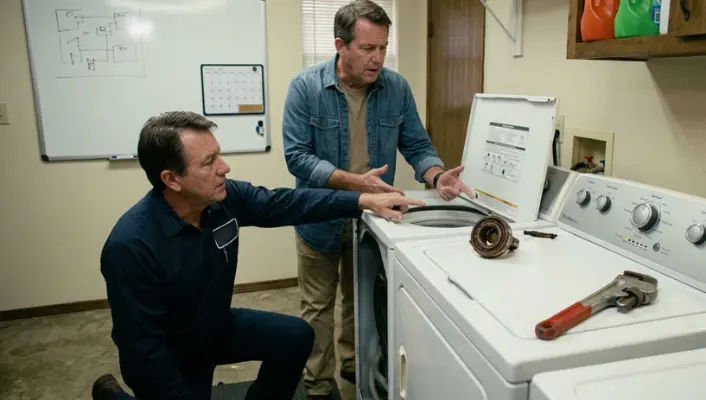
Most machines local technicians work on in Abilene come from a familiar group: Whirlpool, Maytag, Samsung, LG, GE, Kenmore, and Amana. Each has its own common failure patterns worth knowing.
Whirlpool and Maytag direct drive machines fail most often at the motor coupling when overloaded. Samsung front-loaders are known for door latch and control board issues. LG high efficiency machines develop drain pump problems when the filter is not cleaned regularly, which is a bigger issue here given the hard water. Kenmore shares platform designs with Whirlpool and follows similar failure patterns with compatible parts.
Knowing your brand and model number before calling for service helps a technician arrive prepared with the most likely parts, which often means a same-visit repair instead of a return trip.
Frequently Asked Questions
My washer drains but still won’t spin. What does that mean?
This almost always points to the lid switch, door latch, drive belt, or motor coupling. The drainage system is working, but power is not reaching the drum through the drive system.
Is it safe to keep using a washer that won’t spin?
You can still wash clothes, but the wet laundry sitting in the drum promotes mildew growth quickly. Get it looked at sooner rather than later.
Does Abilene’s hard water really make that much of a difference?
Yes. Technicians working locally find significant mineral scale inside machines that are only 6 to 8 years old. It is not exaggerated. The impact on appliance lifespan in West Texas is real and measurable.
How do I know if it is worth repairing?
Use the 50 percent rule. If the repair costs more than half the price of a comparable new machine and your washer is older than 7 or 8 years, replacement is worth considering. Your technician should walk you through that math honestly.
When to Stop Troubleshooting and Call a Professional
The DIY checklist above covers the easy stuff. Once you are past drain hose checks and filter cleaning, most repairs involve electrical testing, internal disassembly, or component replacement that genuinely benefits from proper tools and training.
Attempting to replace a motor, repair a control board, or access drum bearings without experience can damage other components and turn a manageable repair into a much bigger bill.
A trustworthy Abilene appliance technician will diagnose the problem correctly the first time, tell you whether the repair makes financial sense, and check for any secondary hard water damage that might affect other components down the road.
That is the kind of straightforward, no-guesswork service that makes the difference between a quick fix and a recurring headache.
When your washing machine won’t spin in Abilene TX, the team at Abilene Appliance Experts is here to diagnose it right, fix it fast, and help you keep it running longer with honest advice built for West Texas homes.