

You open the door to load a batch of towels, and a wave of sour, swampy air hits you. You already know what comes next. The “clean” laundry you pull out later carries that same stale smell, and now you are running everything twice.
If this sounds familiar, take a breath. Your washer is almost certainly not broken. It is doing what front loaders do when moisture, soap film, and body oils get trapped in places you cannot easily see. The problem is common, it is fixable, and in most homes it is preventable with about ten minutes of care each month.
The short answer to how to clean a smelly front load washer is this: run a hot tub clean cycle with a washer cleaner or a manufacturer approved bleach method, scrub the door gasket, wash the detergent drawer, clear the drain pump filter, and then leave the door open so the drum dries out. The rest of this guide explains why it works, how to do each step properly, and how to stop the smell from coming back.
Why Your Front Load Washer Smells in the First Place
Understanding the cause matters, because a washer that smells is really a washer that is telling you something specific. Fix the cause and the smell stays gone. Cover it up and you will be back here in three weeks.
The Airtight Door Seal Traps Moisture
Front load washers use a rubber gasket, sometimes called a bellows or door boot, to keep water inside the drum. That seal is great at keeping your floor dry. It is also great at keeping the inside of the machine damp long after the cycle ends. Top loaders vent to the room every time you lift the lid. Front loaders do not, so humidity and leftover water sit in the folds of the gasket, where mold and mildew love to settle.
Detergent Buildup Feeds Bacteria
Front load machines use far less water than older top loaders. That saves money, but it leaves less water to flush residue away. When you use too much detergent, or a formula that is not made for high efficiency machines, extra soap and fabric softener cling to the drum, the hoses, and the gasket. Over time that residue forms a slimy layer called biofilm. Bacteria and mold feed on it, and the smell is the result.
Cold Water and Short Cycles Do Not Break Down Residue
Cold water saves energy, but it does not dissolve body oils, softener residue, and detergent film as well as warm or hot water. If nearly every load in your house runs cold and quick, film builds faster than it gets rinsed away.
Wet Laundry Sits Too Long
A forgotten load of gym clothes or towels raises humidity inside a closed drum and invites bacteria. Even a few hours can start the odor cycle, and it gets worse each time it repeats.
A Clogged Drain Pump Filter
Nearly every front loader has a small filter near the bottom front, behind a little access panel. It catches coins, hair ties, lint, and sock fragments. When it clogs, water stays behind, stagnates, and smells. Most owners have never opened it.
Blocked or Slow Drain Lines
Sometimes the smell is not from the washer at all. A dry P trap, a partially blocked standpipe, or a sluggish drain can push sewer gas or stagnant odor back into your laundry space.
Hard Water and Mineral Scale
Mineral scale roughens surfaces inside the machine and gives residue something to hold on to. Many West Texas homes deal with hard water, so if scale is common on your faucets, it is likely building up inside your washer as well.
What the Smell Is Telling You: An Odor Decoder
Not every washer odor has the same cause. Use this table to narrow it down before you start cleaning.
| Smell | Most Likely Cause | Where to Look First | Best Fix |
| Musty, earthy, like a damp basement | Mold or mildew on the gasket or drum | Gasket folds, door glass, drawer | Gasket scrub plus tub clean cycle |
| Sour, like old dishrags | Detergent and softener biofilm | Drawer, drum, hoses | Hot tub clean cycle, reduce detergent |
| Rotten egg or sewage | Drain problem or bacteria in stagnant water | Drain pump filter, standpipe, P trap | Clean filter, check drain, run hot water |
| Dirty socks or body odor on clothes | Overloading, cold water, residue on fabric | Wash habits | Hot cycle, less detergent, fewer items per load |
| Chemical or medicinal | Excess cleaner or softener residue | Drawer and drum | Extra rinse cycle |
| Burning or electrical | Motor, belt, or wiring problem | Do not open the machine | Stop using it and call a technician |
If you notice a burning smell, stop the washer, unplug it, and do not keep running it. That is a repair problem, not a cleaning problem.
Is a Smelly Washer Actually a Health Concern?
Sometimes, yes. Mold spores are part of everyday life, but indoors they should not have a place to grow. The EPA notes that the key point of indoor mold control is controlling moisture, and that mold exposure can irritate the eyes, skin, nose, throat, and lungs, and can trigger asthma attacks in people who are allergic to it. If someone in your household has asthma, allergies, or a weak immune system, a mold ridden washer deserves prompt attention. For a deeper look at moisture and indoor mold, the EPA guide to mold, moisture, and your home is a trusted starting point.
What You Need Before You Start
Most of this you likely already own.
- Rubber gloves and safety glasses
- A microfiber cloth and an old toothbrush
- A shallow baking pan and a few old towels for the filter
- Dish soap and warm water
- A commercial washer cleaner tablet, or liquid chlorine bleach if your manual approves it
- White vinegar, only if your manufacturer permits it
- Your owner’s manual, or the model number so you can look it up
A Critical Safety Warning
Never mix bleach with vinegar, ammonia, or other cleaners. The combination can release toxic gas. If you want to try both products, use them in completely separate cycles with a full rinse between them, and keep the room ventilated. Also remember that some manufacturers advise against bleach in certain front load models, and some caution that frequent vinegar use may wear down rubber seals over time. Always check the manual first.
How to Clean a Smelly Front Load Washer: The Complete Deep Clean, Step by Step
This is the main event. Set aside about an hour of hands on time, plus the cycle time.
Step 1: Empty the Drum and Inspect
Remove all laundry. Check inside the drum and around the gasket for socks, tissues, coins, or anything else trapped. Foreign objects hold moisture and can jam the pump.
Step 2: Clean the Door Gasket
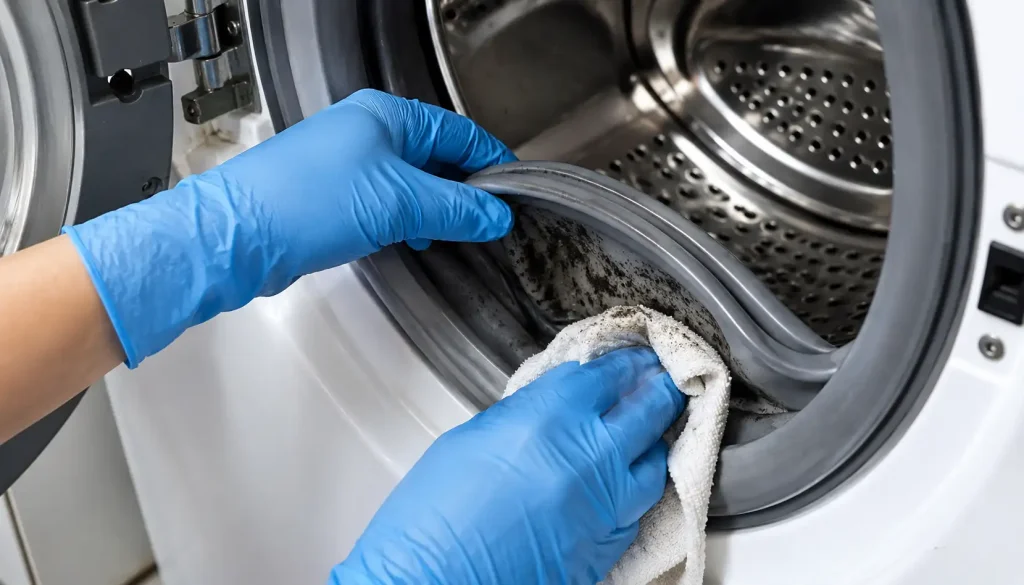
This is where most mold hides, so do not rush it. Pull back the rubber seal and look into every fold. You will often find black or gray spots, slime, hair, and debris.
Start with warm water and a few drops of dish soap to lift loose residue. For stubborn mildew, use a diluted bleach solution of roughly one part bleach to nine parts water if your manual allows it, or a one to one mix of white vinegar and water if it does not. Scrub the folds with the toothbrush, wipe with a clean cloth, rinse with plain water, and dry the seal thoroughly. A dry gasket is a hostile place for mold.
Step 3: Wash the Detergent Drawer and Its Cavity
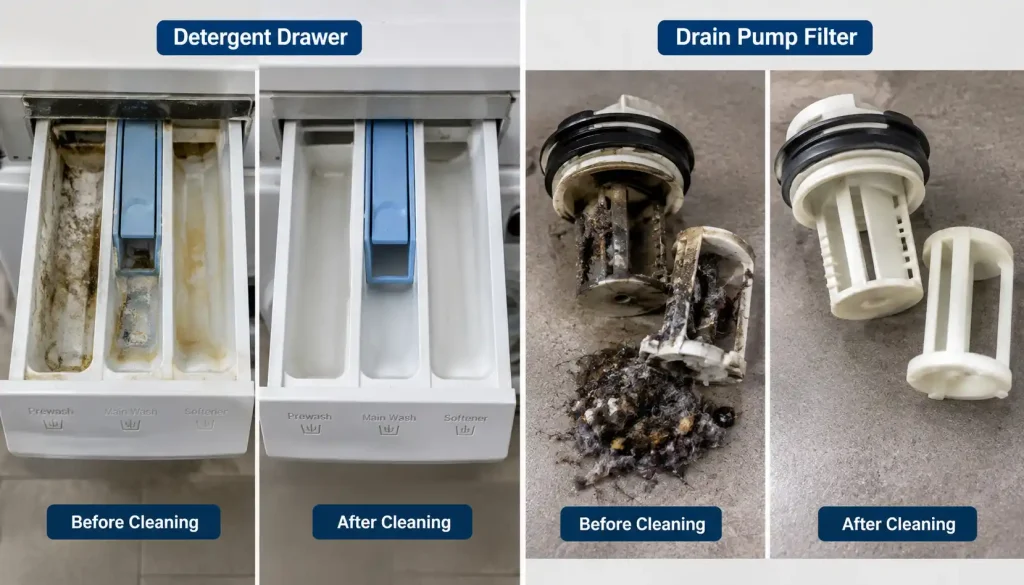
Pull the drawer out. Many pop free with a small release tab, so check your manual if it does not slide out easily. Soak the parts in warm, soapy water and scrub away the slime with a toothbrush. Then shine a flashlight into the empty slot where the drawer sits. That cavity often hides a black, fuzzy film that never sees a cloth. Wipe it out with a cloth on a long handled brush or a wrapped spoon handle.
Step 4: Empty and Clean the Drain Pump Filter
Locate the small access door near the bottom front corner of the washer. Place the towels and baking pan underneath, since a surprising amount of stale water will come out. Many machines have a small drain hose you can pull out first to control the flow. Slowly unscrew the filter, let the water drain, and remove whatever is trapped inside. Rinse the filter, check the housing for debris, and screw it back in firmly to avoid leaks.
Samsung specifically lists cleaning the pump filter as part of its front load mildew process, since it prevents odors.
Step 5: Run a Hot Tub Clean Cycle
You have three good options here, and the right one depends on your model.
- Washer cleaner tablet: Place the tablet in the drum or the drawer as the label directs and run the tub clean or cleaning cycle. This is the simplest option for most homes.
- Diluted chlorine bleach: If your manufacturer approves it, follow the model instructions exactly. Samsung, for example, says to pour bleach into the detergent compartment, not the bleach compartment, then start a self clean cycle right away without laundry inside. Its self clean cycle can take about four hours on front load models, so plan around that.
- Hottest available cycle: If your washer has no dedicated cleaning cycle, run your hottest, longest option with the drum empty.
Do not add laundry to a cleaning cycle. It can damage both the clothes and the machine.
Step 6: Wipe the Drum and Glass
When the cycle ends, wipe the inside of the drum, the door glass, and the gasket again. You will often see a film that the cycle loosened but did not carry away.
Step 7: Run a Rinse Cycle
Run a rinse and spin cycle with plain water to flush out any cleaner. If you still notice residue or a strong chemical smell, run it once more.
Step 8: Let It Dry Completely
Leave the door open. Pull the detergent drawer out an inch or two so air flows through it. This drying step is where many people stop short, and it is the single biggest reason odors come back.
Step 9: The Sniff Test
Put your head near the open door. It should smell neutral, not musty. If a mild odor lingers, repeat the gasket scrub and run one more cleaning cycle. If it returns fast, jump to the section below on when to call a professional.
Bleach vs Vinegar vs Baking Soda vs Washer Cleaner: Which Works Best?
Every method has strengths and trade offs. This table helps you choose.
| Method | Best For | Advantages | Cautions |
| Washer cleaner tablets | Routine monthly cleaning | Easy, made for washers, minimal guesswork | Recurring cost, follow label exactly |
| Liquid chlorine bleach | Visible mold and heavy mildew | Kills mold and bacteria effectively | Not approved on every model, never mix with other cleaners |
| White vinegar | Light residue and gasket wipe downs | Inexpensive, mild | Acid may wear rubber over time, less effective on heavy mold |
| Baking soda | Odor softening in a separate cycle | Gentle, cheap | Does not remove biofilm on its own |
| Dish soap and warm water | Gaskets and drawers | Safe for most surfaces | Needs scrubbing, not enough for heavy mold alone |
| Hot cycle with nothing added | Maintenance between deep cleans | Free | Limited effect on established mold |
Whirlpool recommends deep cleaning the gasket, door, and drum about every 30 cycles using mild detergent and warm water, a washing machine cleaner, or a diluted bleach solution.
Tackling Detergent Buildup at the Source
Cleaning the machine fixes the smell today. Changing your detergent habits keeps it from returning tomorrow.
How to Spot Detergent Buildup
- A slimy, dark film in the drawer or drawer cavity
- A gray or white coating along the gasket
- Clothes that feel stiff, sticky, or look streaked
- More suds than usual, or suds lingering after the cycle
- A sour smell that returns within days of cleaning
Fix Your Detergent Routine
Use HE detergent only. Regular detergent creates too many suds for the low water design of a front loader, and those extra suds leave residue behind. Then measure honestly. The cap line is usually a suggestion for very dirty loads, not a rule for every load. Start with about half the marked amount and increase only if clothes are not coming out clean. Many normal loads need far less soap than you think.
Also consider your fabric softener. Liquid softener leaves a waxy film that clings to the drum and hoses and feeds odor. Many households do better with dryer balls or occasional dryer sheets instead.
Powder vs Liquid vs Pods
Each format can work. Liquid detergents can leave a sticky film if overused. Powders may leave residue if they do not fully dissolve in cold water. Pods reduce measuring errors but can still leave residue if the wash is cold and the load is large. The best formula is the one you can dose accurately and dissolve fully.
Do Not Forget the Hard Water Factor
If you live in an area with hard water, minerals bind with detergent and create a chalky scale. In that case, ask about a water conditioning additive for laundry and clean more often. Check your local water quality report to learn how hard your supply is.
What If the Smell Will Not Go Away?
Sometimes you clean everything correctly and the odor still returns within a few days. That does not mean you failed. It usually means one of three things.
Mold Behind the Drum
Moisture and residue can collect between the inner drum and the outer tub, where you cannot reach with a cloth. This is one of the few problems that needs disassembly to clear properly.
A Drain or Plumbing Issue
If the odor is strongest around the base of the washer and not inside the drum, check the standpipe and trap. A dry trap, partial clog, or improperly vented line can push sewer smell into the room. If your hot water also smells like sulfur at the sink, the water heater may be the source.
A Failing Gasket or Hose
A torn or deteriorating gasket, or a drain hose that holds standing water, can keep a smell going no matter how often you clean. Replacement is often the only real fix. According to Angi, gasket replacement typically runs about $50 to $125, and drain hose replacement about $130 to $250.
Signs It Is Time to Call a Pro
- The smell returns within a week of a proper deep clean
- You see black flecks on clean clothes
- Water pools in the drum after a cycle
- The washer leaks, drains slowly, or shows drain error codes
- There is a burning or electrical smell
If any of those sound familiar, our team can help. Abilene Appliance Experts is a locally owned team of certified, insured technicians who diagnose the actual cause instead of guessing.
You can also learn more about professional washing machine repair options, from gasket and drain hose replacement to pump and drain diagnostics.
When you are ready, schedule a service visit and we will find the cause of the odor and the fix that fits your budget.
Cost Breakdown: DIY Cleaning vs Parts vs Professional Service
| Approach | Typical Cost Range | Best When |
| Monthly cleaning with tablets or household supplies | A few dollars per clean | You want to prevent odors |
| Drain pump filter cleaning | Free | Water drains slowly or smells stale |
| Gasket replacement | About $50 to $125 for the part, more with labor | Gasket is torn, warped, or permanently stained |
| Drain hose replacement | About $130 to $250 | Hose is kinked, clogged, or holding water |
| Professional diagnosis and cleaning | Varies by issue, often $100 to $500 depending on the repair | Odor persists or symptoms go beyond smell |
| Replacing the washer | Usually much higher | Repair costs approach half of the price of a new unit |
A simple guideline for repair or replace decisions: if the repair costs less than half of a new washer, repairing is usually the smarter move. Most washers last roughly 10 to 15 years with reasonable maintenance.
How to Clean a Smelly Front Load Washer for Good: The Preventative Maintenance Routine
Cleaning once is a rescue. Preventing the smell is a habit. This routine takes very little time and delivers the biggest payoff.
The Simple Maintenance Schedule
| How Often | Task | Time Needed |
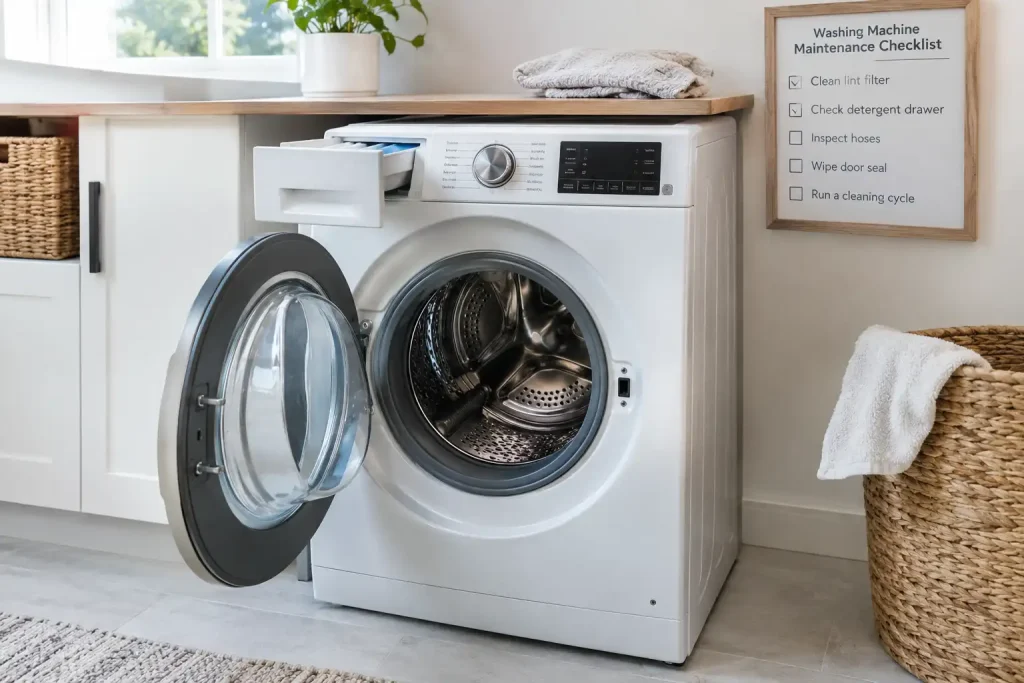
| After every load | Wipe the gasket and glass, remove laundry promptly, leave door and drawer open | 1 minute |
| Weekly | Wipe the gasket folds and check for trapped items | 2 minutes |
| Every 30 cycles or monthly | Run a tub clean cycle with a washer cleaner | 5 minutes plus cycle time |
| Monthly | Wash the detergent drawer and wipe the cavity | 5 minutes |
| Every 2 to 3 months | Clean the drain pump filter | 10 minutes |
| Every 6 months | Inspect the gasket, hoses, and standpipe for wear, wet spots, or leaks | 10 minutes |
| Once a year | Check water hardness and consider a professional tune up if odors have returned | Varies |
Door Open or Closed? The Family Friendly Answer
Leaving the door open is the best way to dry the drum, but it is not always practical. If you have small children or curious pets, a fully open door can become an entry point. In that case, prop the door ajar just enough to let air in, or close the laundry room door so the machine can vent safely, or use a door stop designed for washers. What matters is airflow, not a specific angle.
Small Habits with Big Results
- Remove finished laundry within an hour if possible
- Use HE detergent and measure carefully
- Run a hot wash or sanitize cycle with towels occasionally
- Skip liquid fabric softener or use it sparingly
- Avoid overloading, which prevents proper rinsing
- Do not leave damp towels or gym clothes on top of or inside the washer
- Keep the detergent drawer clean and free of dried residue
Common Myths That Keep Your Washer Smelly
“More detergent means cleaner clothes.” It means more residue, more suds, and more odor. Less is almost always better in a front loader.
“Vinegar fixes everything.” It helps with light residue but may not cut heavy biofilm, and some manufacturers advise against repeated use on rubber parts.
“I can run bleach every week.” Frequent bleach can be hard on seals and hoses. Use it only when needed and only if your manual approves it.
“A scented booster will cover it up.” Scent does not remove biofilm. It hides the problem while it grows.
“My washer is new, so it cannot be moldy.” New machines can develop odor within months if they are used with too much detergent or left closed while damp.
Why Front Load Washers Smell in Abilene Homes
Local conditions make a difference. Many homes in the area keep washers in garages, hall closets, or small utility rooms with little ventilation. Heat during summer and dust from West Texas wind can add to buildup, especially around gaskets and filters. When you combine warm laundry areas with hard water and small closed rooms, mildew has an easy time getting started.
A few local friendly habits help:
- If your washer sits in a garage or closet, leave the door open after each load and run a vent fan if you have one
- Wipe dust from around the door seal and top of the machine
- Consider a water softening additive if you notice white scale on fixtures
- Check the gasket more often during hot months
Our technicians serve homeowners across the region, including appliance repair in Wylie TX neighborhoods.
We also cover nearby communities, including Appliance Repair Tye TX, so help is close when a stubborn odor points to a bigger problem.
Since you are already thinking about maintenance, it is worth reading our home appliance maintenance checklist for the rest of your kitchen and laundry room.
A washer that is drained poorly or moves unevenly can also show other symptoms, so if your machine has started acting up in other ways, read about why a washing machine won’t spin and what the most likely causes are.
Do Not Forget the Dryer and Dishwasher
A clean washer will not help if a musty dryer or a film covered dishwasher undoes your effort. Lint buildup and trapped moisture in a dryer can make clean clothes smell stale, so if your laundry still smells odd after a fresh washer, it may be time for dryer repair or a vent inspection.
Dishwashers collect the same kind of film and food residue that washers do, and they need a routine as well. If yours has developed a smell, our dishwasher repair page explains how we diagnose and fix these issues.
For seasonal reminders and other practical guides, browse more of our appliance maintenance tips.
Quick Reference: Front Load Washer Odor Checklist
Use this as a fast recap the next time your washer smells.
- Identify the smell using the decoder table
- Remove laundry and check for trapped items
- Scrub the gasket folds and dry them completely
- Wash the detergent drawer and cavity
- Clear the drain pump filter
- Run a tub clean cycle following your manual
- Wipe the drum and glass, then rinse
- Leave the door and drawer open
- Adjust detergent type and amount
- Repeat monthly and call a pro if odor returns
Frequently Asked Questions
Why does my front load washer smell even after I clean it?
Usually because moisture or residue remains somewhere you have not reached, such as the drawer cavity, the drain pump filter, or the space between the drum and tub. It can also mean the gasket is damaged or the drain line has an issue. If the smell returns within a week of a thorough clean, professional diagnosis is worth it.
How often should I clean a front load washer?
Wipe the gasket after each load, run a tub clean cycle about once a month or every 30 cycles, and clean the drain pump filter every two to three months. Homes with heavy laundry loads, hard water, or poor ventilation may need to clean more often.
Can I use bleach and vinegar together?
No. Mixing them can release dangerous fumes. If you want to use both, run them in separate cycles with a full rinse between, and only if your manufacturer allows both.
What causes a rotten egg smell in a washer?
It often comes from stagnant water in the drain pump filter, a dry or blocked P trap, or bacteria in the drain line. If your hot water also smells like sulfur at other faucets, the water heater may be involved.
Is it safe to wash clothes in a smelly washer?
It is usually not harmful for most people, but the clothes will absorb the odor and may feel dingy. If anyone in your home has asthma or mold allergies, clean the machine first.
Do washer cleaner tablets really work?
Yes, when used as directed and combined with manual cleaning of the gasket and drawer. They are best as a monthly maintenance step, not a one time fix for heavy mold.
Should I leave the washer door open?
Yes, whenever it is safe to do so. The open door lets air dry the drum and gasket. If small children or pets are a concern, prop the door slightly ajar or ventilate the room instead.
How do I get the smell out of my clothes?
Clean the washer first, then rewash the clothes on a hot cycle if the fabric allows it. Use a measured amount of HE detergent and avoid piling too many items into one load. Dry them completely, since damp fabric brings the odor back.
Are front load washers always smellier than top load washers?
They are more prone to it because of the sealed door and lower water use, but the smell is not inevitable. Regular cleaning and drying habits keep most front loaders fresh for years.
When should I replace the washer instead of repairing it?
If the repair would cost more than about half the price of a comparable new washer, or the machine is well past a decade old with multiple issues, replacement may make more sense. A technician can help you weigh that honestly.
Keep Your Washer Fresh, and Your Laundry Too
A smelly washer is frustrating, but it is one of the most solvable household problems. Understand what is causing the odor, clean the parts that hold moisture, adjust your detergent habits, and let the drum dry. That simple sequence handles the vast majority of cases.
If you have done all of that and the smell keeps coming back, it may be time to let an expert take a look. Visit Abilene Appliance Experts to learn more about what we do for homeowners across the area.
We also offer a full range of appliance repair services in Abilene TX, from washers and dryers to refrigerators and ovens.
Call +1 325 230 7849 or reach out through our contact page to book a visit and get your laundry room smelling fresh again.