

If you live anywhere in Abilene, Texas, you have probably noticed it. Cloudy glasses fresh out of the dishwasher. A washing machine that leaves towels feeling stiff instead of soft. A faint white crust building up around your faucet handles. None of that is a coincidence, and none of it means your appliances are simply getting old. It is the direct, measurable result of Abilene hard water working against your home appliances every single time you run a cycle. If you have noticed any of these issues, you are not imagining it, and you are not alone. Abilene homeowners deal with this constantly, and our team at Abilene Appliance Experts sees the effects of hard water on dishwashers and washers across the city every week.
This guide breaks down exactly what is happening inside your dishwasher and washing machine on a mineral level, why it happens faster here than in most Texas cities, and what you can actually do about it, starting today, without needing to replace anything.
Just How Hard Is Abilene’s Water, Really?
According to the City of Abilene’s own water utilities department, the municipal water supply averages around 240 milligrams per liter of calcium carbonate, which works out to roughly 14 grains per gallon (GPG).
| Classification | Hardness Level (mg/L CaCO3) | Grains Per Gallon (GPG) | Abilene Status |
| Soft | 0 to 60 | 0 to 3.5 | No |
| Moderately Hard | 61 to 120 | 3.6 to 7 | No |
| Hard | 121 to 180 | 7.1 to 10.5 | No |
| Very Hard | Above 180 | Above 10.5 | Yes, Abilene averages about 14 GPG |
Using the United States Geological Survey’s standard water hardness classification, that puts Abilene solidly in the “very hard” category. You will find plenty of local water softener sales pages quoting numbers anywhere from 11 to over 20 GPG for Abilene. Those figures shift because hardness naturally fluctuates depending on which lake source (Fort Phantom Hill Lake, Hubbard Creek Reservoir, or Lake Abilene) is feeding your part of the city at a given time, and because groundwater blending varies seasonally. What does not change is the underlying reality: Abilene sits well above the threshold where mineral scale becomes a genuine appliance problem, not just a cosmetic one.
What Hard Water Actually Does Inside an Appliance
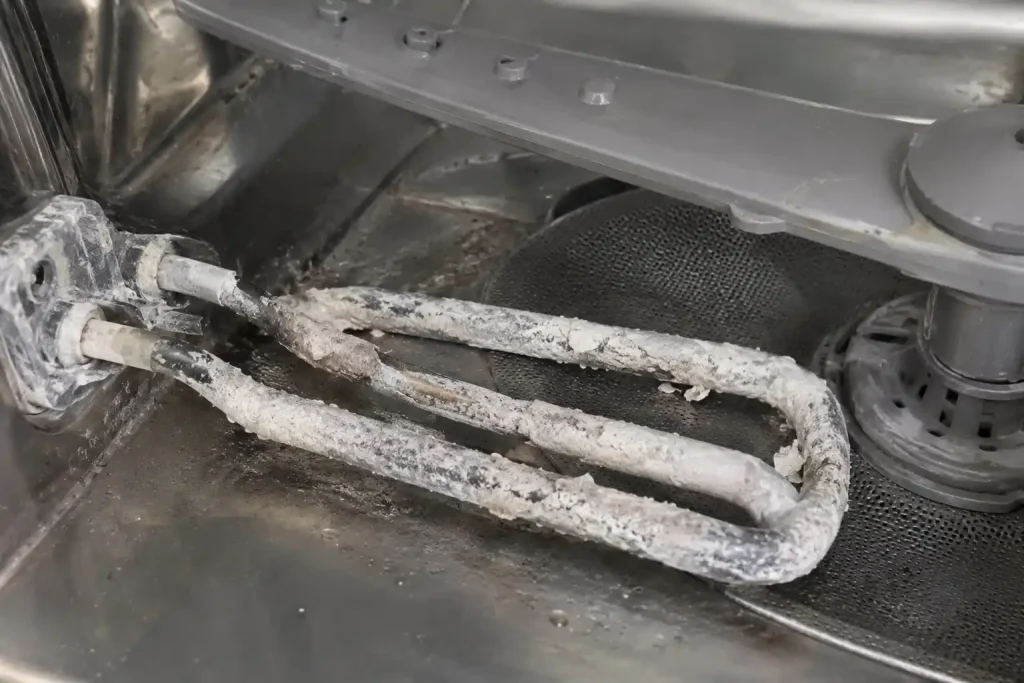
Hard water is not dirty water. It passes every safety and health standard the EPA and the Texas Commission on Environmental Quality require. The issue is purely mineral content. Calcium and magnesium ions stay dissolved in cold water, but the moment that water is heated (inside a dishwasher’s heating element, a washing machine’s internal heater, or a water heater tank), those minerals fall out of solution and crystallize into a hard, chalky substance called limescale.
This scale does three specific kinds of damage:
- Insulation of heating elements. Scale acts almost like a layer of ceramic wrapped around a heating coil. The element has to work harder and run longer to reach the same water temperature, which wastes electricity and shortens the part’s life.
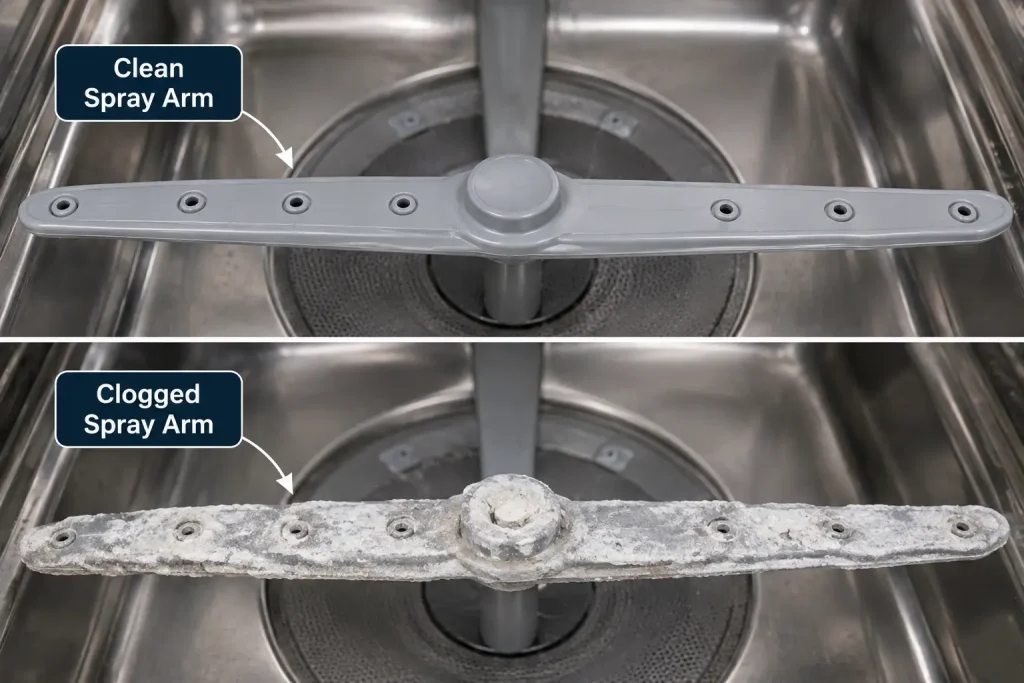
- Narrowing of water lines and valves. Mineral deposits build up inside spray arm nozzles, inlet valves, and drain pumps, gradually restricting flow until the appliance underperforms or throws an error code.
- Residue on the appliance and the load itself. Minerals bond with soap to form a sticky compound called soap curd, which is why dishes come out spotty and laundry can feel scratchy even when the cycle ran perfectly.
None of this happens overnight. It is cumulative, which is exactly why so many homeowners do not connect years of gradually declining performance back to their water supply.
Dishwashers: The First Appliance to Show the Damage
Dishwashers are usually the earliest warning sign in an Abilene home, for one simple reason: they heat water repeatedly, in a small enclosed space, using the same fixed volume of water over and over within a single cycle.
Common symptoms of hard water damage in a dishwasher include:
- White, cloudy film on glassware that will not wipe off (this is etched glass, not just residue, and it is permanent once it happens)
- A heating element visibly coated in white or gray crust
- Reduced drying performance because the heating element cannot reach full temperature efficiently
- Spray arm holes clogged with mineral deposits, leading to poor cleaning in certain zones of the rack
- A rotten egg or musty smell caused by mineral buildup trapping food residue in the sump
If any of that sounds familiar, it is worth having the unit inspected before a clogged element or valve turns into a full failure. Our dishwasher repair technicians see this exact pattern in Abilene homes on a weekly basis, and catching it early is almost always cheaper than waiting for the pump or element to fail completely.
Washing Machines: How Mineral Buildup Wears Down Your Washer
Washing machines take longer to show visible symptoms than dishwashers, but the internal damage is arguably more expensive to fix because it affects moving mechanical parts, not just heating surfaces.
Here is what Abilene hard water does specifically inside a washer over time:
- Detergent has to work overtime. Minerals bind with detergent molecules before they can bind with dirt, meaning you effectively need more soap to get the same clean. Most Abilene households are using 30 to 50 percent more detergent than a soft water home would need, without realizing it.
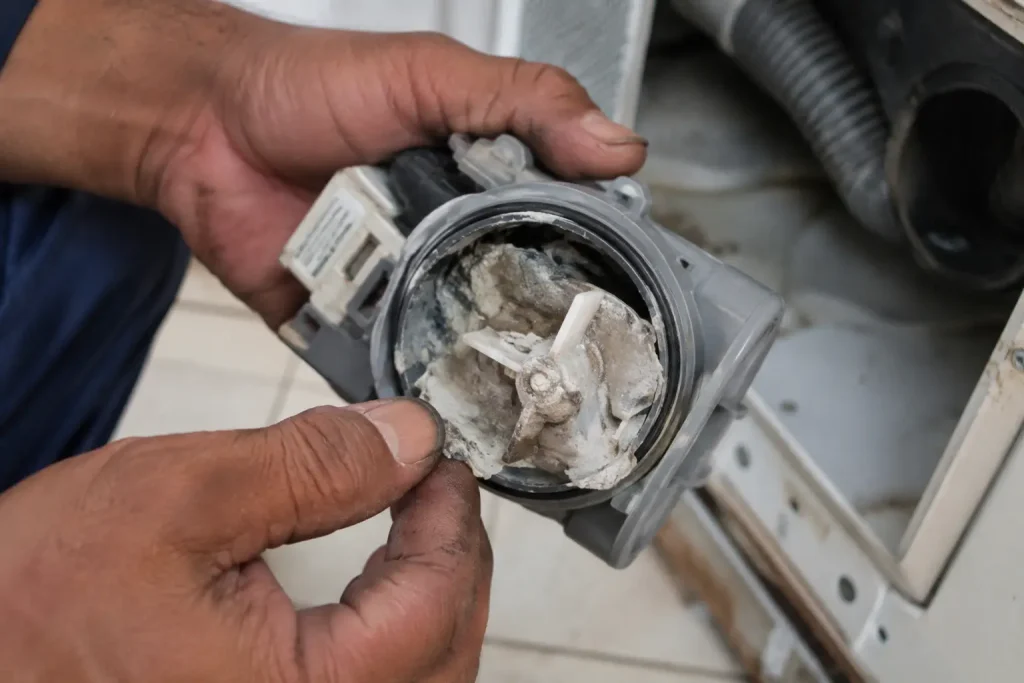
- Drain pumps and hoses accumulate scale. Small deposits gradually restrict the internal diameter of hoses and clog pump impellers, which is one of the more common reasons a washer stops draining properly.
- Fabric quality declines. Mineral deposits get trapped in fabric fibers instead of rinsing away, which is why towels and sheets in hard water homes feel rough and lose absorbency faster.
- Bearings and seals wear prematurely. Scale particles act like a mild abrasive inside seals and bearings, contributing to the leaks and unusual spinning noises that show up in older machines years ahead of schedule.
If your washer has recently stopped agitating or spinning correctly, mineral buildup around the motor coupling or drive components is one of several possible causes worth ruling out. We cover this in detail in our related post, Washing Machine Won’t Spin? Here Are the Most Likely Causes, which walks through the most common failure points local technicians encounter.
If your machine needs hands on diagnosis rather than a DIY check, our washing machine repair team can pinpoint whether scale, a worn part, or something unrelated is behind the issue.
It Is Not Just Dishwashers and Washers
While this article focuses on dishwashers and washing machines because they take the most direct hit from repeated water heating, hard water also affects other appliances in the same home:
- Refrigerators with ice makers or water dispensers are prone to mineral buildup inside the water inlet valve and supply line, which is one of the leading causes of leaks around the dispenser area. If you have noticed water pooling near your fridge, our related guide, How to Fix a Leaking Refrigerator Water Dispenser: Frozen Lines and Faulty Inlet Valves, explains how mineral clogging factors into that specific problem.
- Water heaters lose efficiency fastest of any appliance in a hard water home, since sediment settles at the tank bottom and insulates the burner or element from the water above it.
- Coffee makers, humidifiers, and steam appliances show scale buildup visibly and quickly since they involve small amounts of water being repeatedly heated or evaporated.
If you want a broader, whole home approach to staying ahead of these issues rather than reacting one appliance at a time, our home appliance maintenance checklist lays out a practical seasonal routine for Abilene homeowners.
Cost Comparison: Living With Hard Water vs Protecting Against It
| Approach | Typical Upfront Cost | What It Actually Prevents | Best For |
| Do nothing | $0 | Nothing, scale accumulates continuously | Not recommended long term |
| Monthly DIY descaling (vinegar or citric acid rinse) | Under $10 per month | Slows scale buildup, does not eliminate root cause | Renters or budget conscious homeowners |
| Point of use scale reducing filter on appliance supply lines | $50 to $150 per appliance | Reduces mineral load reaching one specific appliance | Homeowners wanting a targeted fix |
| Whole home water softener system | $1,200 to $2,500 installed | Addresses hard water at the source for every fixture and appliance | Homeowners planning to stay long term |
| Professional appliance descaling and inspection service | $100 to $250 per visit | Removes existing scale and catches early part failure before it spreads | Anyone already seeing symptoms |
How to Protect Your Appliances From Abilene Hard Water
You do not need to install a whole home softener to see real improvement, though it is the most complete long term fix. Here are practical steps that make a measurable difference:
- Run a monthly descaling cycle. Use a dishwasher cleaner tablet or a cup of white vinegar in an empty dishwasher on the hottest cycle. For washing machines, run an empty hot cycle with a cup of distilled white vinegar every four to six weeks.
- Use rinse aid every cycle in the dishwasher. Rinse aid changes the surface tension of water so mineral deposits sheet off glassware instead of drying into spots.
- Switch to a detergent formulated for hard water. Look for products with added water softening agents, or increase your detergent dose slightly per the manufacturer’s hard water guidance.
- Wipe down visible mineral deposits weekly. A simple vinegar and water solution on faucet aerators, dishwasher door seals, and washer detergent trays prevents buildup from spreading to internal components.
- Install an inline filter on appliance supply lines. This is a lower cost middle step between doing nothing and a full whole home system.
- Schedule a professional inspection annually. Catching early stage scale on a heating element or valve is far cheaper than replacing a failed pump or control board later.
Signs It Is Time to Call a Professional
Some symptoms mean scale has already caused mechanical damage, not just cosmetic buildup, and DIY descaling will not resolve them:
- Dishwasher or washer making grinding, clicking, or unusually loud noises
- Cycles that stop mid run or throw error codes repeatedly
- Water pooling underneath either appliance
- Persistent bad odors that do not clear after a deep clean cycle
- Noticeably longer cycle times than when the appliance was new
Reaching out early gives a technician the chance to descale and repair a part instead of replacing the whole unit. You can request an inspection through our contact page whenever you notice any of these warning signs.
Frequently Asked Questions
Is Abilene’s tap water safe to drink even though it is hard?
Yes. Water hardness is a mineral content measurement, not a safety measurement. Abilene’s municipal water meets all EPA secondary drinking water standards, which govern aesthetic factors like taste, odor, and hardness rather than health risk.
How can I tell if my appliance problems are actually caused by hard water?
Look for white or gray chalky residue on heating elements, spray arms, or drain filters when you inspect the appliance, along with cloudy glassware, stiff laundry, or gradually declining cycle performance over several months. These are the clearest indicators of mineral scale rather than a mechanical part failure.
Does a water softener void my appliance warranty?
No. A properly installed water softener does not void manufacturer warranties. In fact, several major appliance brands specifically recommend softened water in their care and maintenance guides to preserve heating element performance.
How often should I descale my dishwasher and washing machine in Abilene?
Given Abilene’s very hard water classification, a monthly descaling cycle for both appliances is a reasonable baseline. Homes with a water softener installed can typically stretch this to once every two to three months.
Will a water softener fully stop appliance damage?
A whole home softener addresses the mineral content at the source, which prevents the vast majority of future scale buildup. It will not reverse damage that has already occurred, such as etched glassware or a heating element that already failed, but it significantly extends the remaining life of your appliances going forward.
Is hard water damage covered by homeowners insurance?
Generally no. Hard water damage is considered gradual wear and maintenance related, not a sudden covered peril, so most homeowners insurance policies exclude it. This makes preventative maintenance and early repair the more cost effective path.
Abilene’s hard water is not something you can wish away, but it also does not have to mean replacing appliances years ahead of schedule. A little consistent maintenance, paired with knowing when a symptom means it is time to bring in a professional, keeps your dishwasher and washing machine running the way they are supposed to for their full expected lifespan. If you are already seeing spotty dishes, stiff laundry, or unusual noises, our appliance repair Abilene TX team can diagnose whether hard water scale is the cause and get things running properly again before a small issue turns into a costly one.