
You pull open the dishwasher expecting clean, dry dishes, and instead you’re staring at a pool of cloudy water sitting at the bottom of the tub. It’s frustrating, it smells, and it makes you wonder whether you’re about to spend hundreds of dollars on a repair or a whole new machine. Take a breath. In the vast majority of cases, a dishwasher not draining all the water is a mechanical blockage, not a dead appliance, and most of the causes can be checked in fifteen minutes with tools you already own.
This guide walks through every place water gets trapped, from the small stuff like filters and knockout plugs to the bigger stuff like drain pumps and control boards, so you can diagnose the problem with confidence instead of guessing.
Why Kitchen and Laundry Appliances Often Act Up Around the Same Time
If you’ve noticed more than one appliance acting strange lately, you’re not imagining it. Hard water, aging plumbing, and shared water lines mean that drainage and water flow problems tend to cluster rather than happen in isolation. A dishwasher struggling to drain and a washing machine struggling to spin often trace back to the same root causes, mineral buildup, worn pump components, or a plumbing system under more strain than usual. If your laundry has been coming out of the wash still soaked, it’s worth reading why washing machines stop spinning and what typically causes it, since the diagnostic process shares a lot in common with dishwasher drainage issues.
Why This Problem Feels Bigger Than It Is
Most homeowners panic the moment they see standing water because a dishwasher feels like a sealed box you’re not supposed to open. There’s also a mental leap from “there’s water in here” to “this is going to cost a fortune.” In reality, dishwasher drainage runs through a simple, predictable path: dishes to filter, filter to sump, sump to pump, pump to hose, hose to either a garbage disposal or an air gap under the sink. A blockage or failure at any single point in that chain stops the whole system. Once you understand the path, troubleshooting stops being a guessing game and becomes a checklist.
Common Signs Your Dishwasher Isn’t Draining Properly
Before assuming the worst, look for these patterns. They often point directly to the cause.
| Symptom | Likely Cause |
| Standing water only around the filter | Clogged filter or sump screen |
| Water backs up into the kitchen sink | Blocked garbage disposal connection or missing knockout plug |
| Gurgling sounds from the sink during the cycle | Shared drain line airflow problem |
| Dishwasher stops mid cycle with an error code | Sensor, pump, or control board issue |
| Slow drain that eventually empties | Partial clog in filter or hose |
| No drainage at all, even after hours | Failed drain pump or fully blocked hose |
Water Related Appliance Issues Aren’t Limited to Dishwashers
Standing water and drainage failures aren’t unique to dishwashers. Refrigerators, for example, run their own internal water systems for ice makers and water dispensers, and those systems fail for surprisingly similar reasons, frozen lines, faulty valves, and worn seals that let water pool where it shouldn’t. If you’ve dealt with water showing up somewhere it doesn’t belong in your kitchen before, you might also want to look at what causes a refrigerator water dispenser to leak and how to fix it, since it covers the same category of internal water management problems from a different angle.
Why Is My Dishwasher Not Draining All the Water? The Most Common Causes
There are really only a handful of places water gets stuck. Here’s each one, in the order technicians typically check them.
1. A Clogged or Dirty Filter
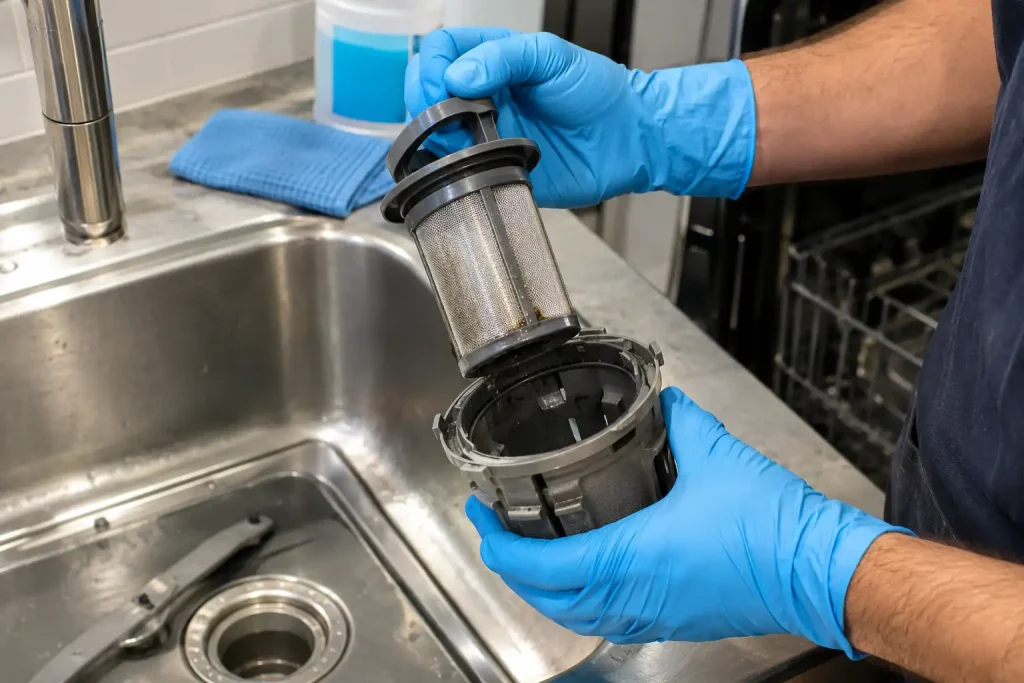
Every modern dishwasher has a filter assembly at the bottom of the tub, usually a cylindrical piece that twists out by hand. Food particles, glass shards from broken items, produce stickers, and grease build up here over time. Once it’s coated or packed with debris, water can’t pass through fast enough to drain completely, and you’ll see standing water pooled directly around it.
2. A Blocked Garbage Disposal Connection
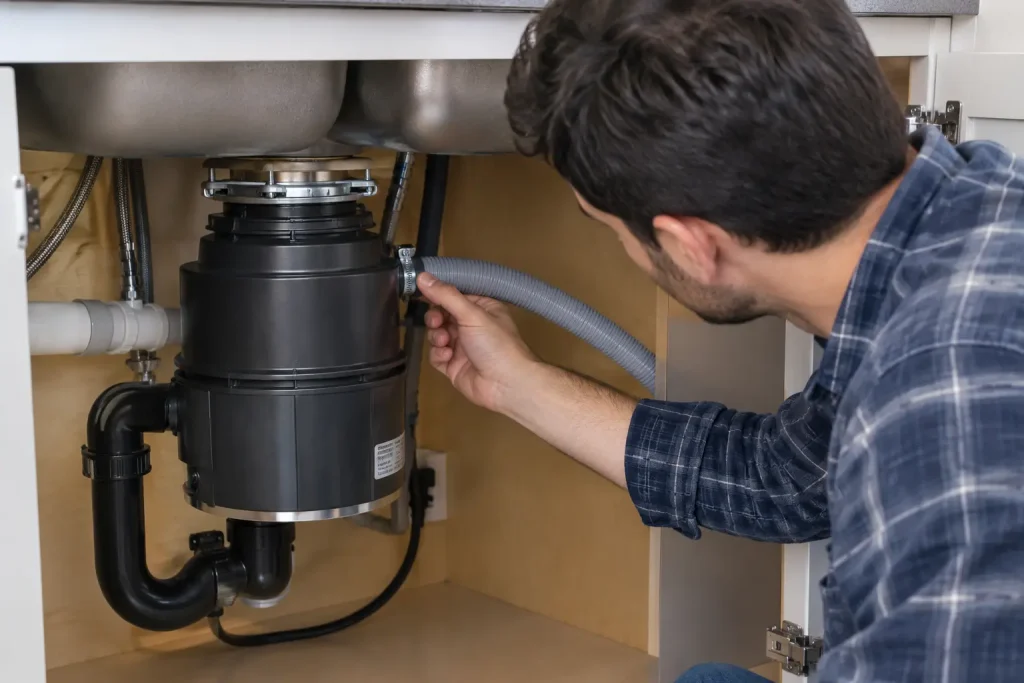
If your dishwasher drains through your kitchen’s garbage disposal, there’s a specific failure point many homeowners never learn about: the knockout plug. When a disposal unit is installed new, there’s a small plastic plug inside the dishwasher inlet nub that has to be knocked out before the hose is connected. If an installer forgets this step, or if the disposal itself is clogged with food waste, water has nowhere to go and simply backs up into the dishwasher.
3. A Kinked, Clogged, or Improperly Looped Drain Hose
The corrugated hose that runs from your dishwasher to the sink area can develop soft clogs from grease and food residue, or it can get physically pinched if the cabinetry was recently worked on. Equally important is the height of the hose. It needs a high loop, or a dedicated air gap fitting, positioned above the level of the sink drain. Without that loop, dirty sink water can siphon backward into the dishwasher, and the dishwasher’s own water may fail to drain forward.
4. A Faulty or Worn Drain Pump
The drain pump is the motorized component that physically pushes water out of the tub. Pumps wear out over years of use, especially in areas with hard water, where mineral buildup can jam the impeller. A failing pump often makes a humming, buzzing, or high pitched noise but moves little or no water. This is one of the few causes on this list that typically requires a replacement part rather than a simple cleaning.
Manufacturer documentation, including Whirlpool’s own troubleshooting guidance, confirms that pump, valve, and control board issues are the leading causes once basic clogs have been ruled out.
5. A Stuck Check Valve
Inside the pump housing, a small rubber or plastic check valve prevents water from flowing backward into the tub once it’s been pushed out. If that valve gets stuck open or closed by debris, water can either fail to leave or flow right back in after the cycle ends.
6. Overloaded or Incorrect Detergent
Using regular dish soap instead of dishwasher detergent, or using too much detergent, creates excessive suds. Suds can overwhelm the pump and trigger a false overflow response, which some machines interpret by halting the drain cycle entirely.
7. A Sensor, Timer, or Control Board Glitch
Newer dishwashers rely on float switches and pressure sensors to know when to drain. If a sensor misreads the water level, the control board may never send the signal to activate the pump. This is less common but worth ruling out if everything mechanical checks out clean.
How to Check the Garbage Disposal Connection
Since this cause gets overlooked so often, it deserves its own walkthrough.
- Turn off the dishwasher and the garbage disposal at the breaker for safety.
- Locate the disposal unit under the kitchen sink.
- Find the small rubber hose clamped to the side inlet of the disposal, which connects to the dishwasher.
- Run the disposal briefly with water flowing to clear any food buildup inside it. A jammed disposal is often the real reason a dishwasher backs up.
- If the dishwasher was recently connected to a new disposal, check whether the knockout plug was removed. If it wasn’t, water is draining into a dead end inside the disposal housing.
- Inspect the hose clamp itself for looseness or a crack that could be restricting flow.
If your dishwasher was recently connected to a new disposal, check whether the knockout plug was removed. If it wasn’t, water is draining into a dead end inside the disposal housing. For the exact removal process and manufacturer guidance, this step by step guide to removing a dishwasher knockout plug covers it in detail.
How to Inspect and Clear the Drain Hose
- Unplug the dishwasher or shut off its breaker.
- Pull the dishwasher out slightly from under the counter if you can access the back panel, or open the cabinet beneath the sink to trace the hose route.
- Look for any section of hose that’s been pinched, twisted, or crushed against the cabinet wall.
- Disconnect the hose at the sink or disposal end and check for a high loop. It should rise above the height of the sink drain before dropping down again.
- Run water or compressed air through the hose to check for internal blockages. A gentle plumber’s snake can dislodge stubborn clogs.
- Reconnect and secure the clamp before testing a cycle.
How to Clean the Filter System
- Open the dishwasher and remove the bottom rack.
- Locate the filter assembly, usually a cylinder with a mesh screen around a coarser outer filter.
- Twist counterclockwise and lift it out.
- Rinse under hot water, scrubbing with an old toothbrush to remove grease film.
- Check the sump area underneath for any trapped glass, bones, or labels.
- Reinsert the filter, making sure it locks back into place, since a loose filter can itself cause drainage errors.
DIY Troubleshooting Steps in Order
If you want a single sequence to follow rather than jumping around, work through these in order. Each step rules out one possible cause before moving to the next.
- Cut power to the dishwasher at the breaker before touching any components
- Remove standing water with a cup and towels so you can see clearly
- Clean the filter and sump area
- Check and clear the garbage disposal connection and knockout plug
- Inspect the drain hose for kinks, clogs, and a proper high loop
- Run a short cycle and listen for pump noise
- Check for excess suds from incorrect detergent
- If none of the above resolves it, suspect the pump, check valve, or control board
How to Fix a Dishwasher Not Draining All the Water Yourself
For the majority of households, a dishwasher not draining all the water gets resolved at the filter or garbage disposal stage, without needing any parts at all. Set aside thirty minutes, work through the checklist above in order, and test after each step rather than doing everything at once. That way, if the problem clears up, you’ll know exactly what caused it and can prevent it from happening again.
DIY Repair vs Professional Repair Cost Breakdown
| Issue | Typical DIY Cost | Typical Professional Repair Cost | Time Needed |
| Clogged filter cleaning | $0 | $80 to $120 (diagnostic plus labor) | 15 to 30 minutes |
| Blocked garbage disposal or knockout plug | $0 to $20 | $100 to $180 | 20 to 45 minutes |
| Kinked or clogged drain hose | $10 to $25 for a new hose | $120 to $220 | 30 to 60 minutes |
| Faulty drain pump replacement | $40 to $90 in parts, high failure risk if inexperienced | $180 to $350 including parts and labor | 1 to 2 hours |
| Control board or sensor issue | Not recommended for DIY | $200 to $450 | 1 to 3 hours |
Prices vary based on your dishwasher’s brand and age, and this table reflects general national ranges rather than a fixed quote.
When to Call a Professional
If you’ve cleaned the filter, cleared the disposal connection, checked the hose, and there’s still water sitting at the bottom after a full cycle, the issue is likely mechanical or electrical rather than a simple clog. Pump replacements, check valve repairs, and control board diagnostics involve disassembling the appliance and testing electrical components, and getting it wrong can damage a part that was otherwise fine. At that point it’s worth bringing in trained hands rather than risking a bigger repair bill. Our dishwasher repair service handles exactly these situations, with same day diagnostics available for Abilene homeowners.
If you’re already dealing with a stack of dirty dishes and want a straight answer on cost and timing before committing, you can schedule a service visit and get a transparent quote before any work begins.
When your dishwasher stops draining and DIY steps haven’t fixed it, you want someone who actually understands the appliance, not just someone with a toolbox. We’re a locally based team that’s spent years diagnosing and repairing kitchen and laundry appliances for homeowners across West Texas. You can learn more about our team and our approach to honest, transparent repairs on our about page.
Why Homeowners Across Abilene Trust Us
Appliance repair only works when it’s done right the first time. That’s why we focus on accurate diagnosis before any part gets replaced, clear pricing before any work begins, and technicians who explain what actually went wrong instead of just handing you a bill. If a dishwasher not draining all the water is just one of several appliance issues on your mind right now, our appliance repair services in Abilene, TX covers everything from refrigerators to dryers under one trusted team.
How to Prevent Future Drainage Problems
Prevention is far cheaper than repair, and most of it comes down to habits.
- Scrape large food debris off plates before loading, rather than relying on the filter to catch everything
- Run hot water at the sink for a few seconds before starting the dishwasher, so it begins its cycle with already hot water instead of cold water that carries less cleaning power
- Clean the filter monthly, or more often in hard water areas
- Avoid overloading the disposal with fibrous scraps like celery or potato peels, which tangle around the impeller
- Use a rinse aid to reduce residue buildup inside hoses and pumps over time
- Run a dishwasher cleaner cycle every one to two months to disolve grease film
West Texas water tends to run harder than the national average, which accelerates mineral buildup inside pumps and hoses faster than in softer water regions. If you notice drainage slowing down every few months rather than as a one time event, that’s often the reason. For a broader maintenance routine covering every major appliance in your home, our home appliance maintenance checklist walks through seasonal upkeep tasks that catch small problems before they turn into repairs.
Energy and water efficient dishwasher models also tend to have finer, self cleaning filtration systems that clog less often. If you’re shopping for a replacement down the line, the ENERGY STAR certified dishwashers page is a solid resource for comparing water usage across models before you buy.
Other Appliance Problems We Also Fix
A dishwasher rarely breaks down in isolation. If your kitchen or laundry room is dealing with more than one issue at once, it helps to know what else we handle.
If your washer is leaving clothes soaking wet instead of spun dry, our washing machine repair service diagnoses drum, belt, and motor issues quickly.
A refrigerator that’s struggling to stay cold puts food safety at risk fast, and our refrigerator repair service covers everything from compressor issues to failing thermostats.
And if your stovetop burners won’t light or your oven can’t hold a steady temperature, our stove repair service handles both gas and electric units.
Frequently Asked Questions
Why is there still water in my dishwasher after the cycle finishes?
Standing water after a cycle almost always means a blockage somewhere in the drain path, most commonly the filter, the garbage disposal connection, or the drain hose. Start by checking and cleaning the filter, since that resolves the majority of cases.
Is it safe to run my dishwasher again if it has standing water?
It’s better to remove the water first and check for a clog before running another cycle. Running it again without clearing the blockage usually just adds more water to the pool and can trigger an error code or shut the unit down.
Can a clogged sink drain cause my dishwasher not to drain?
Yes. Because most dishwashers share a drain line with either the garbage disposal or the kitchen sink, a clog anywhere in that shared line will back up into the dishwasher, even if the dishwasher’s own components are perfectly clean.
How often should I clean my dishwasher filter to prevent drainage issues?
Once a month is a good baseline for most households, and every two weeks if you frequently wash pots with heavy food residue or live in a hard water area.
Do I need to remove the knockout plug if I already had a garbage disposal installed?
Only if the dishwasher connection is new. If your dishwasher has always drained properly through an existing disposal, the plug was already removed during the original installation.
When should I stop troubleshooting and call a repair technician?
If you’ve cleaned the filter, checked the disposal and knockout plug, inspected the hose, and water is still sitting in the tub after a full cycle, that points to a pump, valve, or electrical issue that’s best handled by a trained technician.
Areas We Serve Near Abilene
Dishwasher drainage problems don’t wait for convenient timing, and neither do we. Along with Abilene, we provide same day appliance diagnostics and repairs throughout the surrounding communities.
We regularly serve homeowners with appliance repair in Wylie, TX, appliance repair in Tye, TX, appliance repair in Lytle, TX, and appliance repair in Buffalo Gap, TX. No matter which of these areas you’re in, a technician can typically reach you the same day you call.
Get Your Dishwasher Draining Properly Again
A dishwasher not draining all the water is rarely a sign your appliance is finished, it’s usually a specific, fixable blockage somewhere along a predictable path. Work through the filter, the disposal connection, and the hose first, and you’ll solve most cases without spending a dime. When the problem turns out to be mechanical, our team is ready to diagnose it quickly and get your kitchen back to normal.